

Sex is sacred. Not as a metaphor, as a statement about the nature of life force energy and what is lost when you treat it as nothing more than a physical act.
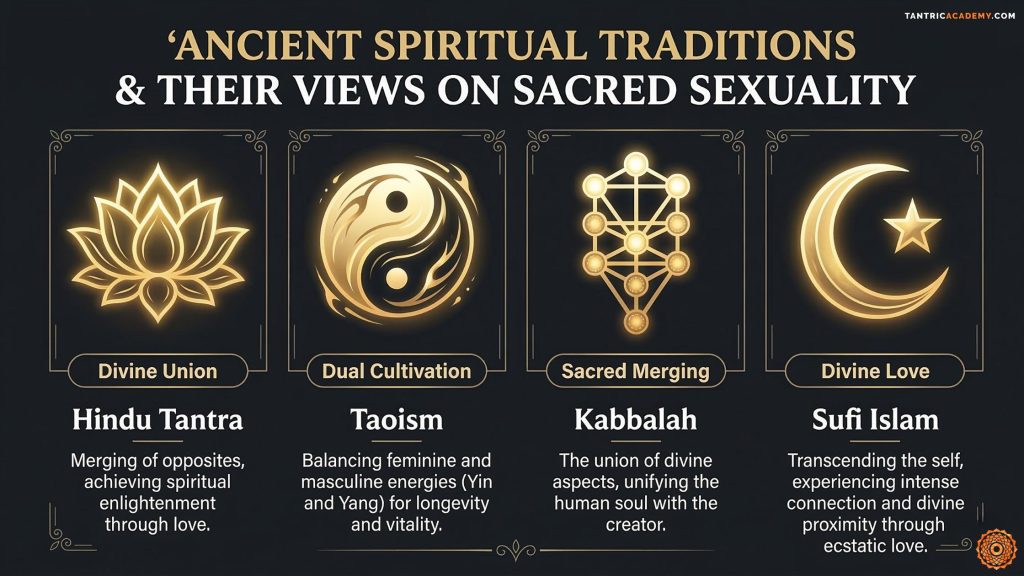
Every major wisdom tradition knew this. In Hindu tantra, the union of Shiva and Shakti was the creative act that brought the cosmos into existence. In Taoism, sexual energy was the most potent form of life energy available to a human being, something to cultivate, not squander. In Kabbalah, the sacred union of masculine and feminine reflected divine structure itself.
And then somewhere along the way in the Western world, sex became something to be ashamed of.
That's the paradox I've sat with for 15 years as a tantric relationship coach. The very thing that nearly every wisdom tradition treated as a gateway to spirituality is the same thing modern culture has wrapped in shame, performance anxiety, and disconnection.
Sacred sexuality is the reclamation of that original understanding. Sacred sexuality is the practice of embodying the sacredness of sex in everyday life, not as an occasional ritual but as a lens through which you see your life force differently. Once you see it that way, you can't unsee it.
In this article I'll explain what sacred sexuality means at the intersection of spirituality and sexuality, how it differs from tantric sex, what science says about why it works, and how it has appeared as a healing path rooted in ancient traditions for thousands of years.
If you're looking for practical techniques and couples practices, I cover all of that separately. This article is about the foundation. The why before the how.
What Is Sacred Sexuality? Spiritual Sex and the Body as a Temple
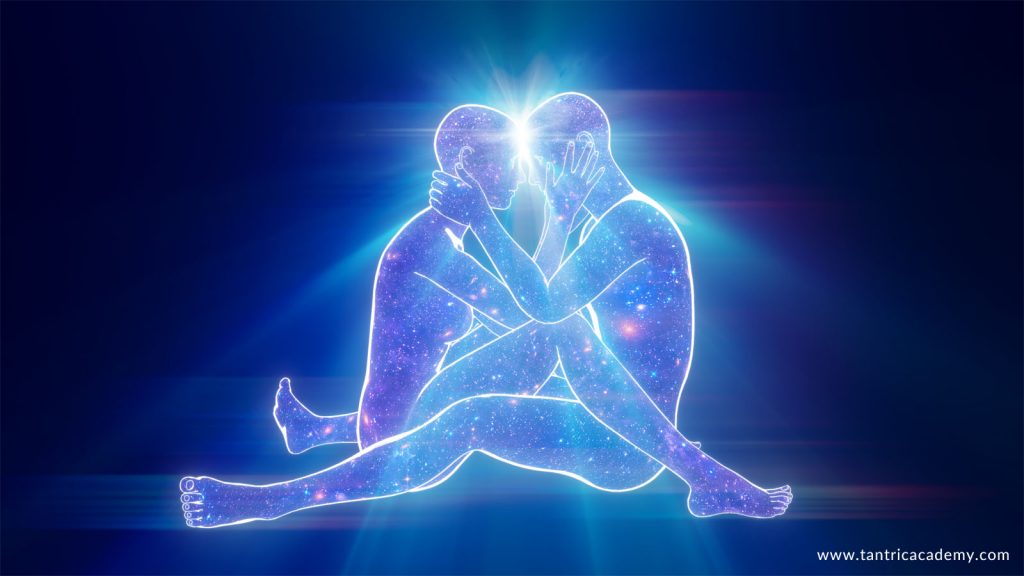
Sacred sexuality is the understanding that sexual energy is life force energy, and that life force energy has the transformative power to heal, awaken, and enrich your spiritual growth.
Let me make that concrete.
Most people relate to sex as a physical act with emotional consequences. Sacred sexuality is a different ontology entirely. It says that what moves through two people when they make love is the same force that moves through all of creation — that the pleasure, the aliveness, the erotic energy of it is not incidental to the universe, it is fundamental to it. The body is not an obstacle to spirituality. The body is a temple through which life energy moves.
Experienced practitioners of sacred sexuality across every tradition describe the same thing: when sex is approached as a sacred act (with presence, loving attention, and conscious touch) it stops being merely a source of pleasure and becomes a vehicle for spiritual awakening. Sexuality becomes a path.
If sexual energy is life force, then how you relate to it matters enormously. Do you treat it as a commodity to be consumed? As something to be hidden? Or as a resource to be cultivated, directed, and honored? Sacred sexuality says the answer to that question determines a great deal about the quality of your intimate connection, your relationships, and your spiritual development.
"Sacred intimacy transcends conventional ideas of pleasure. It taps into the soulful, energetic connection between partners. Through mindful presence, it opens the heart to deeper emotional and spiritual connection. The body becomes a vessel for life force energy, balancing masculine and feminine essence in harmony." — Steffo Shambo
FREE MASTERCLASS
Learn my proven 5-step method to build a lasting connection, rekindle your relationship, save your marriage, or meet the right partner.
Sacred Sexuality vs Tantric Sex: Sex and Spirituality Are Not the Same Thing
| Sacred Sexuality | Tantric Sex | |
|---|---|---|
| What it is | A philosophy and worldview | A specific set of practices |
| The question it answers | Why sex is sacred | How to actually do it |
| What it consists of | A way of regarding sex itself | Breath, positions, energy circulation |
| Found in | Many traditions worldwide | The tantric tradition |
| Without the other | Understood, but never practised | A performance routine, empty |
| Think of it as | The map of the territory | The vehicle you travel in |
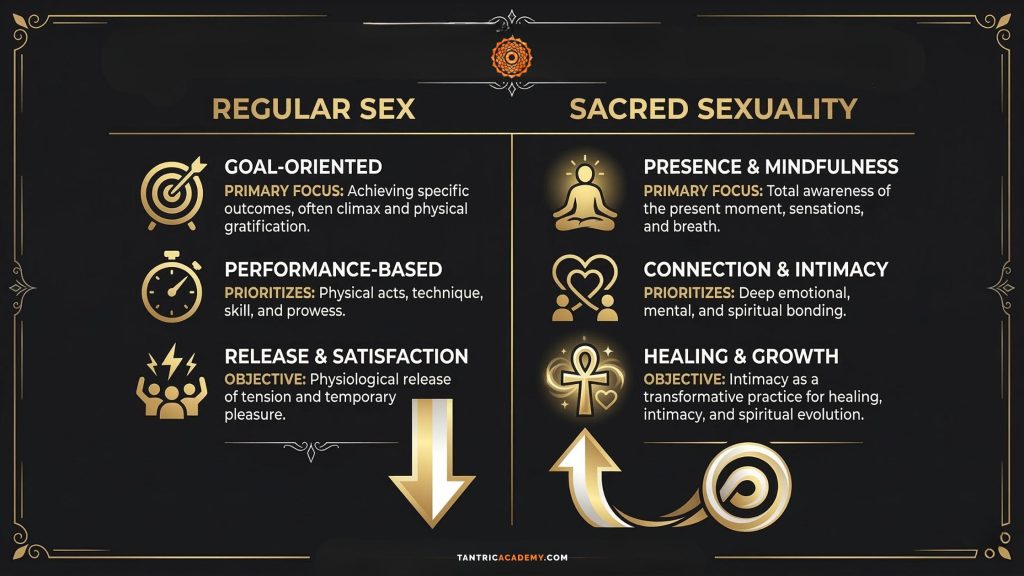
I want to be precise here because I see a lot of confusion between these two terms, and the confusion matters.
Sacred sexuality is the philosophical and spiritual framework, the worldview that sex is sacred and that honoring it as such produces healing, deeper connection, and awakening. It is a concept that exists across virtually every major spiritual tradition. It's the map.
Tantric sex is one specific set of sex practices within that framework. It's the how, the breathwork, the positions, the energy circulation, the partner meditations that embody the philosophy in actual practice.
You can understand sacred sexuality intellectually without ever practicing a single tantric technique. And conversely, you can practice tantric sex as a performance routine without having internalized anything about the sacredness of sexuality. I've seen both. Neither alone produces the deep, transformative intimacy that both together make possible.
It's also worth distinguishing sacred sexuality from other traditions that get conflated with it. The Kama Sutra, for example, is a manual of pleasure and aesthetics rooted in ancient India, not a spiritual path in itself. Sacred sexuality is not about specific sex practices or positions. It's a way of relating to the erotic energy itself.
The deepest and most transformative work happens when both are present, when the philosophy has genuinely landed and the practices are an expression of it. Think of it this way: sacred sexuality is the map of the territory. Tantric sex is the vehicle for traveling it.
If you want the vehicle, my complete guide to tantric sex covers the full practice step by step.
Ancient Wisdom: How Sacred Sexuality Appears Across Spiritual Traditions
What strikes me most about the history of sacred sexuality is the consistency. Cultures with no contact with each other, separated by thousands of miles and thousands of years, arrived at remarkably similar conclusions about the nature of sexual energy and its relationship to the divine. This is ancient wisdom that has been independently verified across the globe.
Hindu Tantra
The Hindu tantric tradition is the most elaborate framework for sacred sexuality in human history. At its heart is the principle that Shiva and Shakti — consciousness and energy, masculine and feminine — are the two poles of a single reality, and that their sexual union is the original creative act. Shakti herself is the erotic energy of the cosmos in embodied form. The swadhisthana chakra — the sacral energy center — is considered the seat of this sexual and creative force. The vajra and the yoni are not merely anatomical terms in this tradition. They are symbols of divine polarity. For a deeper look at the tradition, my guide on what is tantra covers the full lineage, and my guide on the history of the chakras unpacks where this energy map actually came from.
Taoism
In Taoism, sexual energy is identified with Jing — the most fundamental form of vital essence in the body. Taoist sexual practices focus on conserving and transforming Jing into higher forms of life energy, Qi and Shen, rather than simply expending it through genital stimulation alone. The Taoist path to wholeness runs directly through the conscious cultivation of sexual vitality. The concept of sexual transmutation maps closely to this: instead of releasing the energy, you redirect it to enrich your whole life and relationships.
The Taoist approach is remarkably practical in its orientation. This is not abstract spirituality. It's a physiology of energy with thousands of years of refinement behind it.
Kabbalah
In the Kabbalistic tradition, the sacred union of masculine and feminine principles is considered a reflection of the inner nature of God. Human sexuality, practiced consciously and with honest communication and loving attention, is a participation in this divine structure. The sacredness of sex in this tradition is not a peripheral idea — it is central to the entire cosmological framework.
Sufi Islam
The Sufi poets, particularly Rumi and Hafiz, used the language of erotic love as the primary metaphor for the soul's relationship with the divine. The longing, the union, the sense of oneness and the dissolution of boundaries between lover and beloved. This was not literary decoration. It was a description of actual transcendent states of consciousness arrived at through spiritual practice — a direct experience of connection at the soul level.
The Neuroscience: Why Sacred Sexuality Produces Transcendent States
I want to spend some time on this because I think it's important for the Western mind to have a neurological scaffold for what the ancient traditions were describing. The science makes the spirituality credible, and the spirituality gives the science its full meaning.
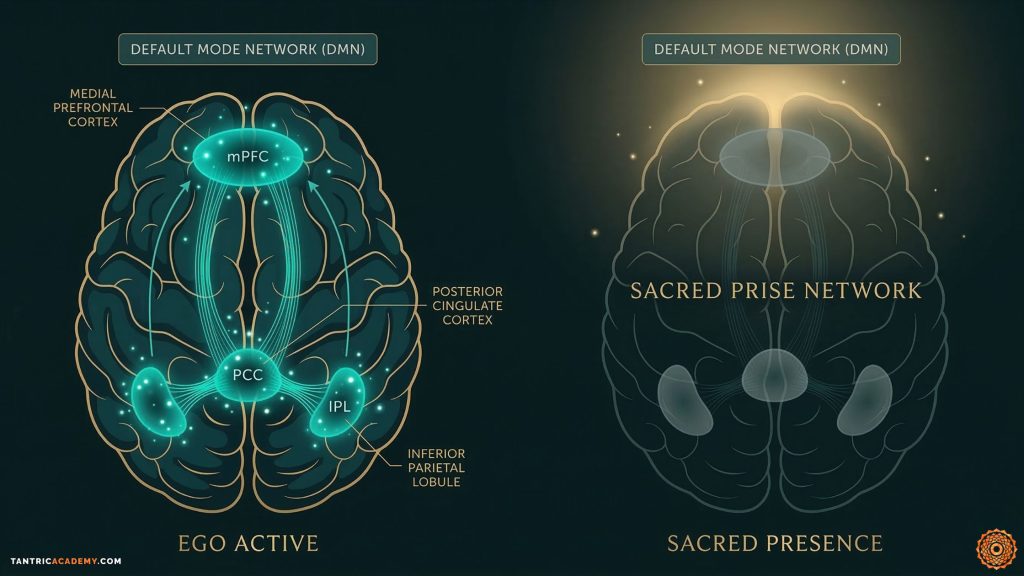
Neuroscientists studying the brain have identified what they call the Default Mode Network, or DMN. This network is most active during self-referential thought, rumination, and mind-wandering. It's the neural correlate of the ego's constant internal monologue. High DMN activity is strongly associated with depression, anxiety, and mental suffering. When it substantially quietens, what researchers describe as transcendent states of consciousness become accessible, states characterized by oneness, expanded pleasure, ecstatic states, and the dissolution of the ordinary sense of self.
This is precisely what happens with psychedelic substances. A systematic review published in Frontiers in Neuroscience found consistent DMN reductions across psilocybin, LSD, and ayahuasca, and linked those reductions directly to the mystical, ego-dissolving experiences users report. A widely cited PLOS One fMRI study confirmed this with brain imaging, showing significant decreases in DMN activity at its core hubs.
Sacred sexuality, practiced with genuine presence, mindfulness, and the right quality of attention, produces the same suppression. The ego's commentary falls away. The sense of separation dissolves. Something much larger comes forward. This is what is sometimes called transcendental sex... a term that points at the same phenomenon from a slightly different angle. When you access your sacred sexuality at this depth, you don't just feel connected to your partner. You merge with something larger than both of you.
Many practitioners report an afterglow effect lasting days or even weeks after a profound session, a sense of wholeness and true aliveness that lingers well beyond the intimate moments themselves. The more consistently you practice, the more accessible these states become.
Sacred Sexuality as Intimacy, Healing, and Self-Care
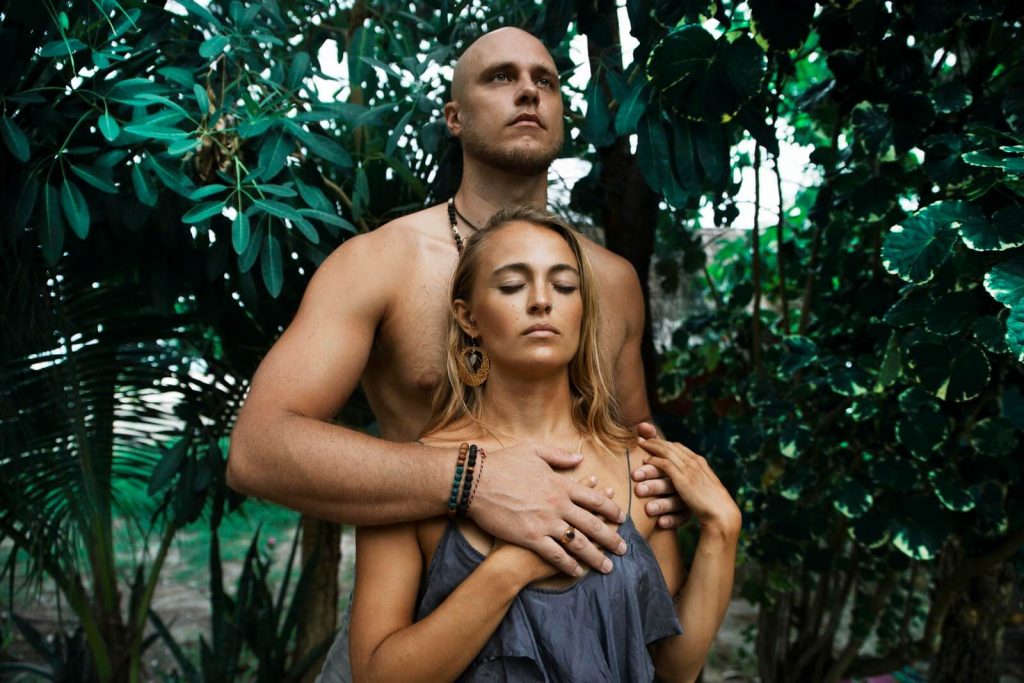
One of the things I encounter most commonly in the men I work with is sexual shame. Not the explicit, conscious kind that a person can name and talk about. The deeper, structural kind that shows up as an inability to be fully present during sex, a sense that desire itself is somehow wrong or dangerous, a disconnection from the body that began in adolescence and was never resolved.
Sacred sexuality addresses this at the root. When you begin to relate to your sexual energy as life force, as something intrinsically valuable rather than something to be managed or suppressed, the shame loses its grip. You're not fighting the energy anymore. You're working with it. Your sense of self-worth shifts. Your relationship with your own body shifts. This is sacred sexuality as self-care, as self-love, as the most honest spiritual practice available to you.
I've watched men who had carried shame around their sexuality for decades have it simply lift. Not through therapy, not through suppression, not through trying harder to be different. Through practice. Through showing up again and again to their own sexual experience with respect and curiosity rather than shame and fear. Sexuality becomes an expression of love, for themselves first, and then for their partners.
The healing also extends to relational intimacy. Many couples who come to me have drifted into a pattern where sex feels mechanical or absent. Sacred sexuality offers a way to deepen that connection because it asks both partners to show up as themselves, with honest communication, conscious touch, and real presence, rather than as performers. My guide on building a tantric relationship goes deeper on exactly how that works. Understanding the masculine and feminine polarity that underlies attraction is closely connected to this, when that polarity is restored, the true connection and charge between partners returns naturally.
How to Cultivate Sacred Sexuality: Signs You’re Ready to Begin
In my experience, there are certain signals that a man is ready to cultivate sacred sexuality in his life. Not everyone is. Some people encounter these ideas too early and they don't land. But if any of the following resonate, you're probably ready.
Sex has started to feel like it's missing something.
You've had plenty of it by conventional standards but you keep having this sense that something deeper is available — a more sensual, more intimate connection that you haven't been able to access. That feeling is accurate. It's pointing at something real.
You feel disconnected from your body in general.
Not just during sex. You live in your head. The intellectual world is much more vivid to you than the physical and energetic one. The path of sacred sexuality is one of the fastest routes back into the body I know of, into true aliveness and embodied spiritual growth.
You're drawn to spirituality but haven't yet connected it to your intimate life.
Men who meditate, who read about consciousness, who have done inner work in other areas, but who have kept sexuality in a separate box. Sacred sexuality is the integration of these two domains. Sex and spirituality are not opposites. They were always meant to be a single path.
You want a deeper connection with a partner but don't know how to get there.
You've tried. Something remains at arm's length. The path to depth runs through presence, vulnerability, and the willingness to embody what you know rather than just think it.
If you're unsure where you currently sit on the masculine-feminine polarity spectrum (often a useful starting point before this work): the masculine and feminine energy quiz takes five minutes and gives you a clear read.
How to Begin: Creating a Sacred Sexual Practice
The entry point to sacred sexuality is not a technique. It's an intention, a decision to relate to your life energy differently.
Before anything else, decide that you are going to approach your sexual experience with curiosity and respect rather than just seeking an orgasm or a release. That decision alone begins to shift things. It signals to your nervous system, and to your partner, that something different is happening here.
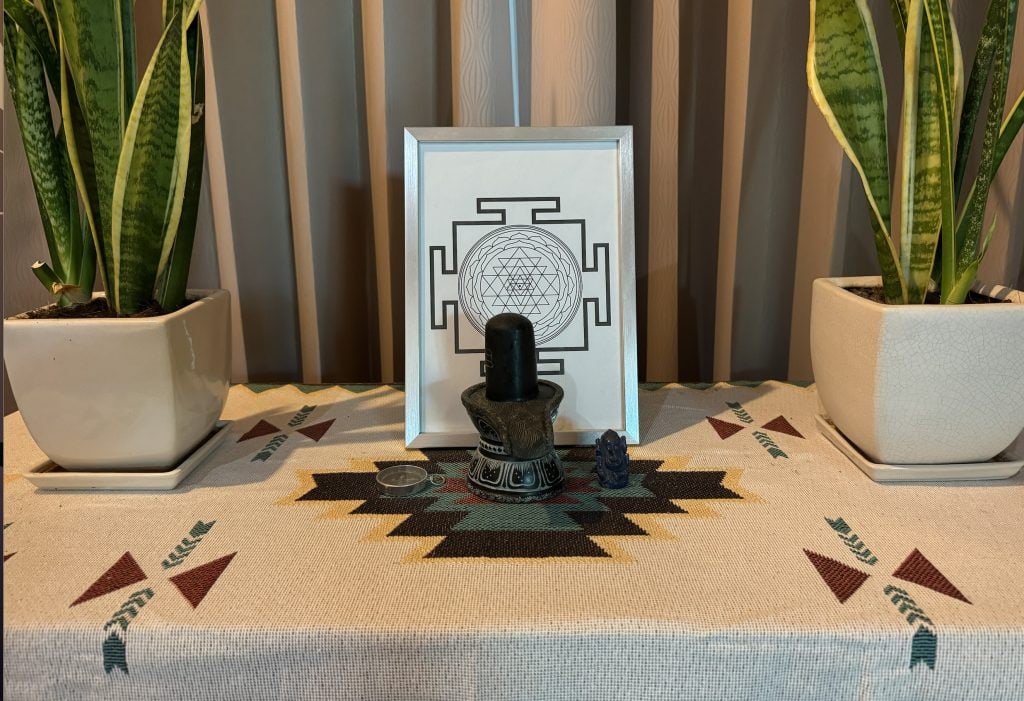
From there, the first practical step I recommend is creating a sacred space for practice. Even a corner of a room, a candle, a few minutes of silence before any intimate moment. These aren't decorative choices. The external environment shapes the internal environment. When you create a sacred container, the practice inside it deepens.
Begin with solo sexual practice before partner practices. Breathwork and conscious self-pleasure, approached without the goal of orgasm, are the most direct ways to begin developing the energetic sensitivity that sacred sexuality depends on. You need to be able to feel the sexual energy in your own body (to awaken it, circulate it, and embody it) before you can do that with a partner.
Mindfulness is the core skill underneath all of it. Not meditating in a formal sense necessarily, but bringing that quality of present, non-judgmental awareness into your intimate moments. That shift alone, from performance mode to presence mode, is what begins to awaken the transcendent dimension of sexuality.
When you're ready to move beyond the philosophy into actual tantric sex practice, my complete guide to tantric sex walks you through the full six-step method for couples and the essential solo practices for men. If you want to go broader first, my tantra for beginners guide covers the full foundation, and my list of the best tantra books is the fastest way to go deep on the ancient wisdom behind all of this.
Final Thoughts: What Our Ancestors Knew
The suppression of the concept of sacred sexuality is, historically speaking, relatively recent and relatively Western. For most of human history, in most cultures, sexual energy was understood as one of the most potent spiritual forces available to a human being, something to cultivate, not suppress.
Something was lost when that understanding was replaced with shame. And something is being recovered now.
I've spent 15 years watching men reclaim their relationship with their sexuality, not as a performance or an indulgence but as a genuine path of spiritual growth and profound connection. What I've seen in those men, in their partnerships, in the way they carry themselves, makes me certain of one thing.
The ancients were right.
If you're ready to stop figuring this out alone and want a structured path with direct support, that's exactly what I built The Tantric Man Experience for. It's my flagship 9-week mentorship program for men, covering sexual energy mastery, masculine presence, and deep intimacy from the ground up. If that's where you want to go, I'd love to work with you.
Frequently Asked Questions About Sacred Sexuality
What are the 4 categories of sexuality?
Different frameworks categorize sexuality in different ways. One common model describes four dimensions: physical (sensation and biological response), emotional (intimacy, vulnerability, and relational bonding), mental (fantasy, desire, and meaning-making), and spiritual (sexuality as a vehicle for transcendence and connection to something larger than oneself). Sacred sexuality is specifically concerned with that fourth dimension — and with how developing it transforms and enriches the other three. Most people live primarily in the first two. The work of sacred sexuality is integrating all four.
What is sacred feminine sexuality?
Sacred feminine sexuality refers to the Shakti principle, the understanding that feminine sexual energy is not passive or receptive in a diminished sense, but is in fact the active creative force of the universe in embodied form. In Hindu tantra, Shakti is the power that animates Shiva. Without her, consciousness has no expression. In practical terms, sacred feminine sexuality is about a woman reclaiming her erotic energy as something holy, not something to be performed for a partner or managed out of shame, but something to be honored as a source of vitality, intuition, and spiritual power. For men working with sacred sexuality, honoring the feminine principle in a partner begins with honoring it within themselves first.
What is the 72 hour intimacy rule?
The 72 hour rule refers to the idea of waiting at least 72 hours between sexual encounters in order to allow desire and erotic tension to rebuild between partners. The premise is sound, most couples lose polarity through overexposure and routine, and creating spaciousness between intimate moments allows that charge to return. From a tantric perspective, I'd frame it slightly differently. The goal isn't just to manage frequency. It's to cultivate the quality of attention you bring to each encounter. Whether you wait 72 hours or 72 minutes, what matters is whether you arrive fully present, or whether sex has become automatic. The gap is useful mainly because it breaks automaticity. Presence is what actually restores intimacy.
What is sacred intimacy?
Sacred intimacy is the practice of bringing presence, reverence, and genuine vulnerability into physical and emotional closeness with another person. It's distinguished from ordinary intimacy not by what happens externally but by the quality of consciousness both partners bring to it. In sacred intimacy, you're not performing for each other. You're genuinely meeting each other, at the soul level, not just the surface. This requires the willingness to be fully seen and to fully see your partner, without the usual protective distance most people maintain even during sex. Sacred intimacy is both the doorway into sacred sexuality and one of its primary fruits.
What is the 3 3 3 rule of intimacy?
The 3 3 3 rule of intimacy is a practical framework suggesting that couples should prioritize three minutes of conscious connection daily, three hours of quality time weekly, and three days away together every three months. The underlying logic is about consistent investment in the relational container — because intimacy doesn't maintain itself. It requires regular, intentional attention. From a tantric perspective this maps directly onto what I teach. Sacred sexuality doesn't live in occasional peak experiences. It's built through daily practice, even if that practice is three minutes of eye contact and synchronized breathing before bed. The container is everything.
Are 20% of marriages sexless?
Research suggests that somewhere between 15 and 20 percent of marriages are sexless, typically defined as having sex fewer than ten times per year. When you include couples who are technically having sex but experiencing it as disconnected, obligatory, or unfulfilling, the number is considerably higher. In my experience working with hundreds of couples, the sexless marriage is almost never about physical desire having disappeared. It's about emotional disconnection, unspoken resentment, loss of polarity, or shame that was never addressed. Sacred sexuality offers a way back in, not by fixing the sex problem directly, but by restoring the energetic and emotional conditions under which genuine intimacy becomes possible again.
Which part do men like to be touched?
Most people assume the answer is purely anatomical. But men who have done real inner work around sacred sexuality consistently report that the most powerful touch is not genital. It's the heart center, the back of the neck, the solar plexus. Touch that communicates genuine presence and loving attention, not technique or performance, is what actually lands at the deepest level. The body is a temple. What moves a man most is not where he is touched but whether the person touching him is truly there. That distinction is at the heart of what conscious touch in sacred sexuality is all about.